Platform comparison
| Platform | YES odds | NO odds | Fee | KYC | Settlement | |
|---|---|---|---|---|---|---|
Polymarket (via Kalshi UK) Pick polygram.ink (preferred broker) |
3% | 97% | 0% (USDC on-chain) | No-KYC up to $1,500 | USDC, auto via UMA oracle | Live odds → |
Polymarket (direct) polymarket.com |
3% | 97% | 0% | Geo-blocked in US/UK/EU | USDC, on-chain | Live odds → |
Kalshi kalshi.com |
— | — | Up to 7% per trade | US-only, KYC required | USD | Live odds → |
Betfair Exchange betfair.com |
— | — | 2-5% commission | Full KYC from first trade | GBP / EUR | Live odds → |
Manifold Markets manifold.markets |
— | — | Play-money (mana) | None — play-money | Mana (no cash-out) | Live odds → |
Market context
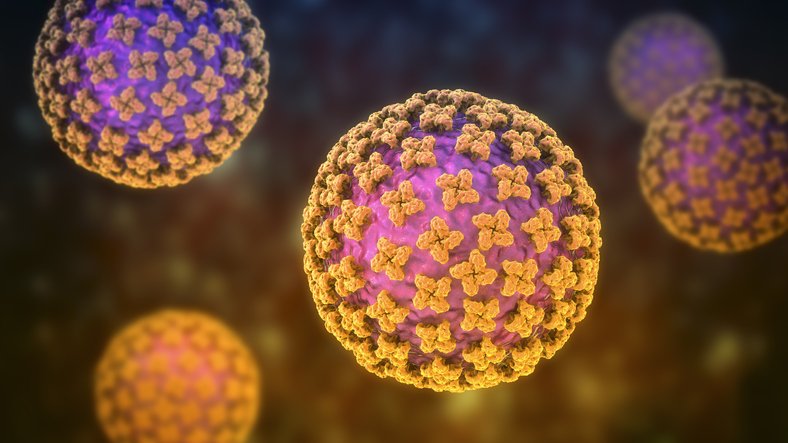
The World Health Organization has explicitly ruled out the risk of a global hantavirus epidemic comparable to COVID-19, stating that transmission requires close, practically nose-to-nose proximity. This real-world assessment directly underpins the current 3% market price on Polymarket, where traders are betting on whether the WHO will later characterise a hantavirus outbreak as a pandemic before December 2026. On the Polygon network, conditional tokens priced in USDC reflect this low probability, as the underlying biology of the virus—primarily rodent-to-human transmission with limited human-to-human spread—makes a pandemic scenario highly improbable.
Historically, comparable outbreaks such as the 2026 Andes virus cluster on the MV Hondius cruise ship resulted in eight confirmed cases and three deaths, yet the CDC and WHO maintained the overall risk to the public was extremely low[4][8]. Unlike respiratory viruses that spread easily in human populations, hantaviruses are zoonotic and rarely achieve sustained human transmission, with only the Andes strain showing documented human-to-human spread at a case fatality rate up to 50%[3]. The WHO’s consistent stance that hantavirus cannot cause a global pandemic, combined with the absence of any licensed vaccine or specific antiviral treatment, frames how traders should interpret the current 3% probability as a reflection of scientific consensus rather than market uncertainty[2][8].
Traders should monitor official WHO communications and CDC situation summaries for any shift in pandemic classification, particularly regarding the Andes virus outbreak on cruise ships[9]. The settlement window ends on 31 December 2026, so any new outbreak declarations or WHO press briefings explicitly using the term "pandemic" would be the primary catalyst for price movement. Recent CDC updates confirm that no cases of Andes virus have been detected in the United States following the cruise ship outbreak, and all exposed US citizens have completed their 42-day monitoring period without further public health follow-up needed[9]. This ongoing absence of widespread transmission reinforces the low probability, though traders must watch for any unexpected WHO announcements that could override current scientific assessments.
Methodology
Methodologically we separate two layers: the live probability (Polymarket mid-price) and the platform attributes (fee, KYC, settlement currency, payment rails). That keeps the comparison honest — a single canonical probability across the row, with the venue-by-venue trade-offs spelt out in the columns next to it.
Resolution & payout
Polymarket-based markets settle through the UMA Optimistic Oracle on Polygon. A proposer submits the outcome, a two-hour challenge window opens, and unchallenged proposals finalise the resolution. Payouts settle automatically in USDC the moment the result is final — no bookmaker, no delay.
Kalshi-based markets settle in USD via the CFTC-regulated clearinghouse. Betfair Exchange settles in GBP/EUR net of commission. Manifold is play-money and does not pay out real funds.
FAQ
- Where can I trade this market with the lowest fees?
- Polymarket is geo-blocked in the US/UK/EU. The easiest 0%-fee broker into the same order book is Kalshi UK. Kalshi charges up to 7% per trade; Betfair Exchange takes 2-5% commission on net winnings.
- How does resolution work?
- Through the UMA Optimistic Oracle on Polygon: a proposer submits the outcome, a two-hour challenge window opens, and USDC payouts settle automatically once the result is final.
- What's the difference between YES and NO shares?
- A YES share pays $1.00 if the event happens, $0 otherwise. A NO share pays $1.00 if the event doesn't happen. The market price between 0¢ and 100¢ is the implied probability.
- What does Polymarket cost to trade?
- Polymarket itself charges 0% — the only cost is the Polygon network fee, typically under $0.01 per transaction. Off-chain venues like Kalshi or Betfair charge 2-7% commission.
- How fast are USDC deposits?
- Polygon credits deposits after 12 confirmations — usually under 30 seconds. Withdrawals follow the same path and land back in your wallet within minutes.
%22%2F%3E%3Cpath%20d%3D%22M%206%2066%20A%2026%2026%200%200%201%2058%2066%22%20fill%3D%22%23E6B98D%22%20opacity%3D%220.9%22%2F%3E%3Ccircle%20cx%3D%2232%22%20cy%3D%2226%22%20r%3D%2222%22%20fill%3D%22%23F5CBA7%22%2F%3E%3Crect%20x%3D%2214%22%20y%3D%224%22%20width%3D%2236%22%20height%3D%228%22%20rx%3D%224%22%20fill%3D%22%2354a9eb%22%2F%3E%3C%2Fsvg%3E) and
and%22%2F%3E%3Cpath%20d%3D%22M%206%2066%20A%2026%2026%200%200%201%2058%2066%22%20fill%3D%22%23E6B98D%22%20opacity%3D%220.9%22%2F%3E%3Ccircle%20cx%3D%2232%22%20cy%3D%2226%22%20r%3D%2222%22%20fill%3D%22%23F5CBA7%22%2F%3E%3Cpolygon%20points%3D%2216%2C18%2020%2C4%2024%2C18%22%20fill%3D%22%2354a9eb%22%2F%3E%3Cpolygon%20points%3D%2224%2C18%2028%2C3%2032%2C18%22%20fill%3D%22%2354a9eb%22%2F%3E%3Cpolygon%20points%3D%2232%2C18%2036%2C3%2040%2C18%22%20fill%3D%22%2354a9eb%22%2F%3E%3Cpolygon%20points%3D%2240%2C18%2044%2C4%2048%2C18%22%20fill%3D%22%2354a9eb%22%2F%3E%3C%2Fsvg%3E)
Trade Hantavirus pandemic in 2026? on Kalshi UK
Live order book, 0% fees, USDC settlement in seconds.
Open live market →