Platform comparison
| Platform | YES odds | NO odds | Fee | KYC | Settlement | |
|---|---|---|---|---|---|---|
Kalshi UK Pick polygram.ink |
0% | 100% | 0% (USDC on-chain) | No-KYC up to $1,500 | USDC, auto via UMA oracle | Open on Kalshi UK → |
Polymarket polymarket.com |
0% | 100% | 0% | Geo-blocked in US/UK/EU | USDC, on-chain | Open on Kalshi UK → |
Kalshi kalshi.com |
— | — | Up to 7% per trade | US-only, KYC required | USD | Open on Kalshi UK → |
Betfair Exchange betfair.com |
— | — | 2-5% commission | Full KYC from first trade | GBP / EUR | Open on Kalshi UK → |
Manifold Markets manifold.markets |
— | — | Play-money (mana) | None — play-money | Mana (no cash-out) | Open on Kalshi UK → |
Live odds for Polymarket-based markets come from the Polygon order book. Non-Polymarket venues show attributes only; clicking any row opens the market on Kalshi UK.
Active sub-markets
Market context
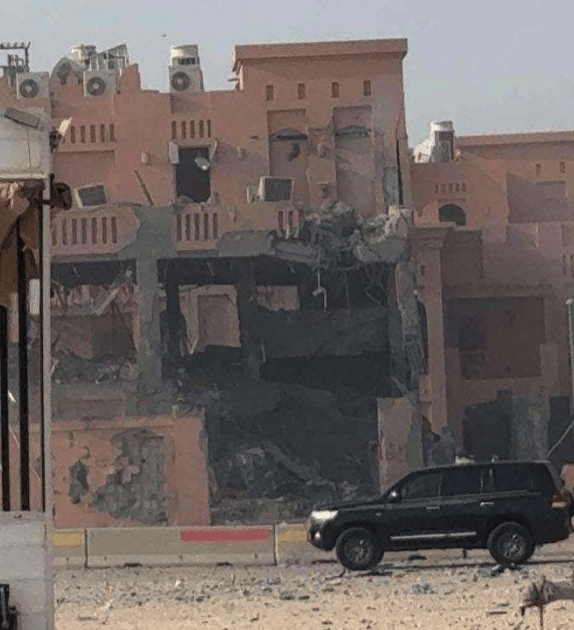
Israel is currently engaged in active warfare with Iran and its regional allies, having launched a sustained strike campaign into Iranian territory since late February 2026 alongside the United States. This ongoing conflict, which has already resulted in thousands of casualties across Lebanon and Iran, forms the immediate backdrop for the prediction market asking how many different countries Israel will strike in 2026. The current crowd-implied probability of 0% for a "YES" outcome suggests traders are betting the market will resolve to zero, a stance that appears counterintuitive given the visible intensity of current aerial operations.
Historical precedents frame how to interpret this near-zero probability, particularly the September 2025 incident where Israel carried out strikes across six countries in just 72 hours, including Lebanon, Syria, Tunisia, Qatar, and Yemen. Furthermore, trader consensus on a similar March 2026 Polymarket contract overwhelmingly favoured exactly three sovereign UN member states—Iran, Lebanon, and Syria—as targets, indicating that multi-country engagement is a recurring pattern in this theatre. The 0% price likely reflects a specific bet on the market definition excluding strikes within territories controlled by Israel as of December 2025 or the West Bank and Gaza, rather than a belief that Israel will cease all cross-border aerial activity entirely.
Traders should monitor official announcements regarding the renewal of major military operations, as the United States and Israel are reportedly preparing for a possible renewal of significant strikes against Iran. Key catalysts include scheduled diplomatic meetings and any shifts in the ceasefire dynamics in Lebanon, where over 120 strikes were conducted across southern Lebanon and the Beqaa Valley in late May 2026. The resolution source will be a consensus of credible reporting, meaning traders must watch for verified confirmations of drone or missile impacts on foreign soil that are officially acknowledged by the Israeli government, as intercepted missiles or ground-based artillery fire will not count towards the settlement.
Methodology
We track How many different countries will Israel strike in 2026? on the five venues with material liquidity for prediction markets. Live odds come from the Polymarket Polygon order book — the only source that ships real-time data under an open licence. For Kalshi, Betfair and Manifold we list platform attributes (fee, KYC, settlement, payment) instead of fabricated odds, because their APIs use non-comparable contract definitions.
Resolution & payout
Polymarket-based markets settle through the UMA Optimistic Oracle on Polygon. A proposer submits the outcome, a two-hour challenge window opens, and unchallenged proposals finalise the resolution. Payouts settle automatically in USDC the moment the result is final — no bookmaker, no delay.
Kalshi-based markets settle in USD via the CFTC-regulated clearinghouse. Betfair Exchange settles in GBP/EUR net of commission. Manifold is play-money and does not pay out real funds.
FAQ
- What's the difference between YES and NO shares?
- A YES share pays $1.00 if the event happens, $0 otherwise. A NO share pays $1.00 if the event doesn't happen. The market price between 0¢ and 100¢ is the implied probability.
- What does it cost to trade on Kalshi UK?
- Zero. Kalshi UK routes every order to the live Polymarket order book; the only cost is the Polygon network fee, typically under $0.01 per transaction.
- How fast are USDC deposits?
- Polygon credits deposits after 12 confirmations — usually under 30 seconds. Withdrawals follow the same path and land back in your wallet within minutes.
- Do I need to KYC for this market?
- Not under $1,500 of lifetime trading volume. Above that threshold, Kalshi UK triggers a quick verification flow that finishes in minutes.
- How reliable are the quoted odds?
- The YES/NO percentages are the live mid-prices of the Polymarket order book. On deep markets they move every few seconds; on thinner ones you'll see short plateaus.
%22%2F%3E%3Cpath%20d%3D%22M%206%2066%20A%2026%2026%200%200%201%2058%2066%22%20fill%3D%22%23E6B98D%22%20opacity%3D%220.9%22%2F%3E%3Ccircle%20cx%3D%2232%22%20cy%3D%2226%22%20r%3D%2222%22%20fill%3D%22%23F5CBA7%22%2F%3E%3Crect%20x%3D%2214%22%20y%3D%224%22%20width%3D%2236%22%20height%3D%228%22%20rx%3D%224%22%20fill%3D%22%2354a9eb%22%2F%3E%3C%2Fsvg%3E) and
and%22%2F%3E%3Cpath%20d%3D%22M%206%2066%20A%2026%2026%200%200%201%2058%2066%22%20fill%3D%22%23E6B98D%22%20opacity%3D%220.9%22%2F%3E%3Ccircle%20cx%3D%2232%22%20cy%3D%2226%22%20r%3D%2222%22%20fill%3D%22%23F5CBA7%22%2F%3E%3Cpolygon%20points%3D%2216%2C18%2020%2C4%2024%2C18%22%20fill%3D%22%2354a9eb%22%2F%3E%3Cpolygon%20points%3D%2224%2C18%2028%2C3%2032%2C18%22%20fill%3D%22%2354a9eb%22%2F%3E%3Cpolygon%20points%3D%2232%2C18%2036%2C3%2040%2C18%22%20fill%3D%22%2354a9eb%22%2F%3E%3Cpolygon%20points%3D%2240%2C18%2044%2C4%2048%2C18%22%20fill%3D%22%2354a9eb%22%2F%3E%3C%2Fsvg%3E)
Trade How many different countries will Israel strike in 2… on Kalshi UK
Live order book, 0% fees, USDC settlement in seconds.
Trade on Kalshi UK →