Platform comparison
| Platform | YES odds | NO odds | Fee | KYC | Settlement | |
|---|---|---|---|---|---|---|
Polymarket (via Kalshi UK) Pick polygram.ink (preferred broker) |
26% | 74% | 0% (USDC on-chain) | No-KYC up to $1,500 | USDC, auto via UMA oracle | Live odds → |
Polymarket (direct) polymarket.com |
26% | 74% | 0% | Geo-blocked in US/UK/EU | USDC, on-chain | Live odds → |
Kalshi kalshi.com |
— | — | Up to 7% per trade | US-only, KYC required | USD | Live odds → |
Betfair Exchange betfair.com |
— | — | 2-5% commission | Full KYC from first trade | GBP / EUR | Live odds → |
Manifold Markets manifold.markets |
— | — | Play-money (mana) | None — play-money | Mana (no cash-out) | Live odds → |
Outcome probabilities
Current market-implied probability for each outcome, from the live order book.
| Outcome | Probability |
|---|---|
| December 31 | 26% |
| August 31 | 20% |
| July 31 | 14% |
| July 17 | 11% |
Market context
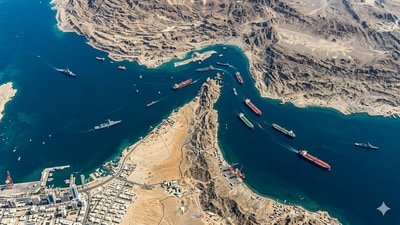
The question centres on whether the United States will formally collect transit fees, tolls, or protection payments from shipping entities or governments for passage through the Strait of Hormuz by end-2026. Polymarket currently prices this outcome at 11%, reflecting substantial scepticism that such a scheme will materialise within the settlement window. The mechanism could involve direct charges to vessel operators, payments from foreign governments seeking US naval escort, or in-kind compensation such as oil allocations—any of these would trigger a "Yes" resolution.
Historical precedent offers limited direct comparison. The US has never systematically charged for Hormuz transit, though it has periodically discussed cost-sharing arrangements with Gulf allies for regional security operations. The Trump administration's 2020 rhetoric about allies paying for US military presence in the Middle East did not translate into formalised Strait fees. More recently, discussions around burden-sharing in the Indo-Pacific have remained largely rhetorical. The 11% probability reflects market participants' assessment that introducing a novel revenue mechanism faces substantial diplomatic, legal, and operational friction.
Traders should monitor statements from the State Department and Pentagon regarding Middle East force posture and burden-sharing frameworks. Any formal announcement of a pilot programme, memorandum of understanding with Gulf states, or legislative proposal to authorise Hormuz fees would shift conviction materially. The window extends through 2026, allowing time for policy shifts following the 2024 US election cycle, though implementation timelines for such schemes typically extend beyond two years. Escalation in regional tensions could accelerate discussions, though historical patterns suggest rhetorical posturing outpaces concrete fee collection.
Methodology
This page is a comparison snapshot: one live quote, four reference venues with their key attributes, and a single execution path — every trade button routes to Kalshi UK, which mirrors the Polymarket order book directly.
Resolution & payout
Polymarket-based markets settle through the UMA Optimistic Oracle on Polygon. A proposer submits the outcome, a two-hour challenge window opens, and unchallenged proposals finalise the resolution. Payouts settle automatically in USDC the moment the result is final — no bookmaker, no delay.
Kalshi-based markets settle in USD via the CFTC-regulated clearinghouse. Betfair Exchange settles in GBP/EUR net of commission. Manifold is play-money and does not pay out real funds.
FAQ
- How does resolution work?
- Through the UMA Optimistic Oracle on Polygon: a proposer submits the outcome, a two-hour challenge window opens, and USDC payouts settle automatically once the result is final.
- What's the difference between YES and NO shares?
- A YES share pays $1.00 if the event happens, $0 otherwise. A NO share pays $1.00 if the event doesn't happen. The market price between 0¢ and 100¢ is the implied probability.
- What does Polymarket cost to trade?
- Polymarket itself charges 0% — the only cost is the Polygon network fee, typically under $0.01 per transaction. Off-chain venues like Kalshi or Betfair charge 2-7% commission.
- How fast are USDC deposits?
- Polygon credits deposits after 12 confirmations — usually under 30 seconds. Withdrawals follow the same path and land back in your wallet within minutes.
- Do I need to KYC for this market?
- On Polymarket directly, no — it's wallet-based. Intermediary brokers like Kalshi UK trigger KYC only above $1,500 of lifetime trading volume; under that you trade pseudonymously with a single wallet address.
%22%2F%3E%3Cpath%20d%3D%22M%206%2066%20A%2026%2026%200%200%201%2058%2066%22%20fill%3D%22%23E6B98D%22%20opacity%3D%220.9%22%2F%3E%3Ccircle%20cx%3D%2232%22%20cy%3D%2226%22%20r%3D%2222%22%20fill%3D%22%23F5CBA7%22%2F%3E%3Crect%20x%3D%2214%22%20y%3D%224%22%20width%3D%2236%22%20height%3D%228%22%20rx%3D%224%22%20fill%3D%22%2354a9eb%22%2F%3E%3C%2Fsvg%3E) and
and%22%2F%3E%3Cpath%20d%3D%22M%206%2066%20A%2026%2026%200%200%201%2058%2066%22%20fill%3D%22%23E6B98D%22%20opacity%3D%220.9%22%2F%3E%3Ccircle%20cx%3D%2232%22%20cy%3D%2226%22%20r%3D%2222%22%20fill%3D%22%23F5CBA7%22%2F%3E%3Cpolygon%20points%3D%2216%2C18%2020%2C4%2024%2C18%22%20fill%3D%22%2354a9eb%22%2F%3E%3Cpolygon%20points%3D%2224%2C18%2028%2C3%2032%2C18%22%20fill%3D%22%2354a9eb%22%2F%3E%3Cpolygon%20points%3D%2232%2C18%2036%2C3%2040%2C18%22%20fill%3D%22%2354a9eb%22%2F%3E%3Cpolygon%20points%3D%2240%2C18%2044%2C4%2048%2C18%22%20fill%3D%22%2354a9eb%22%2F%3E%3C%2Fsvg%3E)
Trade US charges Hormuz fees by 2026? on Kalshi UK
Live order book, 0% fees, USDC settlement in seconds.
Open live market →